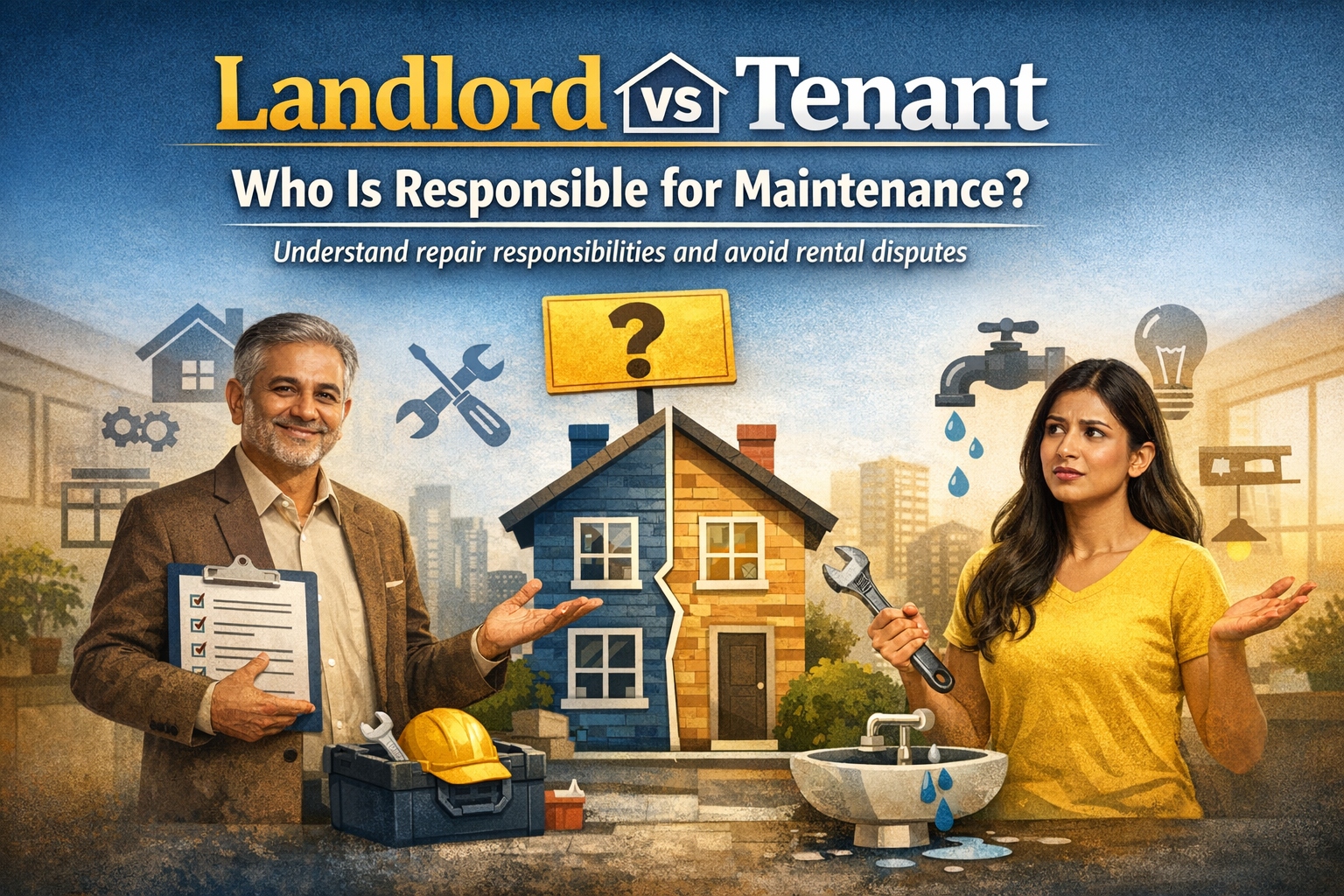
Landlord vs Tenant: Who Is Responsible for Maintenance?
One of the most common causes of conflict in rental properties is maintenance responsibility. Many disputes arise simply because landlords and tenants are unclear about who is responsible for what. Understanding maintenance duties clearly helps avoid misunderstandings, delays, and legal issues.
Let’s break down who is responsible for maintenance—the landlord or the tenant—under typical rental agreements in India.
Why Maintenance Responsibility Matters
Clear maintenance roles help:
-
Prevent disputes
-
Ensure timely repairs
-
Protect property value
-
Improve landlord-tenant relationships
Most responsibilities are defined in the rental agreement, but there are general standards landlords and tenants should follow.
Landlord Responsibilities
Landlords are usually responsible for structural and major maintenance of the property.
1. Structural Repairs
-
Walls, ceilings, floors
-
Roof and seepage issues
-
Major cracks or damage
2. Plumbing & Electrical Systems
-
Main pipelines
-
Concealed wiring
-
Water supply issues not caused by misuse
3. Major Appliances (If Provided)
-
Water heaters
-
AC units
-
Built-in kitchen appliances
4. Safety & Compliance
-
Safe electrical fittings
-
Secure doors and locks
-
Fire safety measures
-
Legal compliance with housing regulations
5. Preventive Maintenance
-
Periodic inspections
-
Painting (usually after long tenancy)
-
Structural upkeep
Tenant Responsibilities
Tenants are generally responsible for day-to-day upkeep and minor repairs.
1. Routine Maintenance
-
Cleaning and hygiene
-
Replacing light bulbs
-
Fixing minor wear and tear
2. Minor Repairs
-
Faucet leaks due to regular use
-
Switches or sockets damaged by usage
-
Drain blockages caused by misuse
3. Damage Caused by Negligence
-
Broken fixtures
-
Damaged fittings
-
Appliance damage due to improper handling
4. Reporting Issues Promptly
Tenants must inform landlords or property managers quickly to prevent small problems from becoming major repairs.
Shared Responsibilities
Some maintenance tasks may be shared, depending on the rental agreement:
-
Painting during long tenancy
-
Pest control
-
Annual servicing of appliances
-
Maintenance of common areas (in apartments)
Role of the Rental Agreement
The rental agreement is the final authority. It should clearly mention:
-
Maintenance responsibilities
-
Cost limits for tenant repairs
-
Approval process for major repairs
-
Move-in and move-out condition clauses
A well-defined agreement reduces conflicts.
How Property Management Companies Help
Property management companies act as neutral coordinators by:
-
Defining responsibilities clearly
-
Managing maintenance requests
-
Coordinating repairs
-
Maintaining records and reports
-
Ensuring fair cost allocation
This creates transparency for both landlords and tenants.
Common Maintenance Disputes
-
Who pays for seepage repairs?
-
Appliance breakdown responsibility
-
Painting charges at move-out
-
Damage vs normal wear and tear
Clear documentation and inspections help resolve these issues.
Conclusion
Maintenance responsibility is a shared effort, but clarity is key. Landlords handle major and structural repairs, while tenants manage routine upkeep and damage caused by misuse. A clear rental agreement and professional property management can prevent disputes and ensure smooth property operations.
Leave a Reply