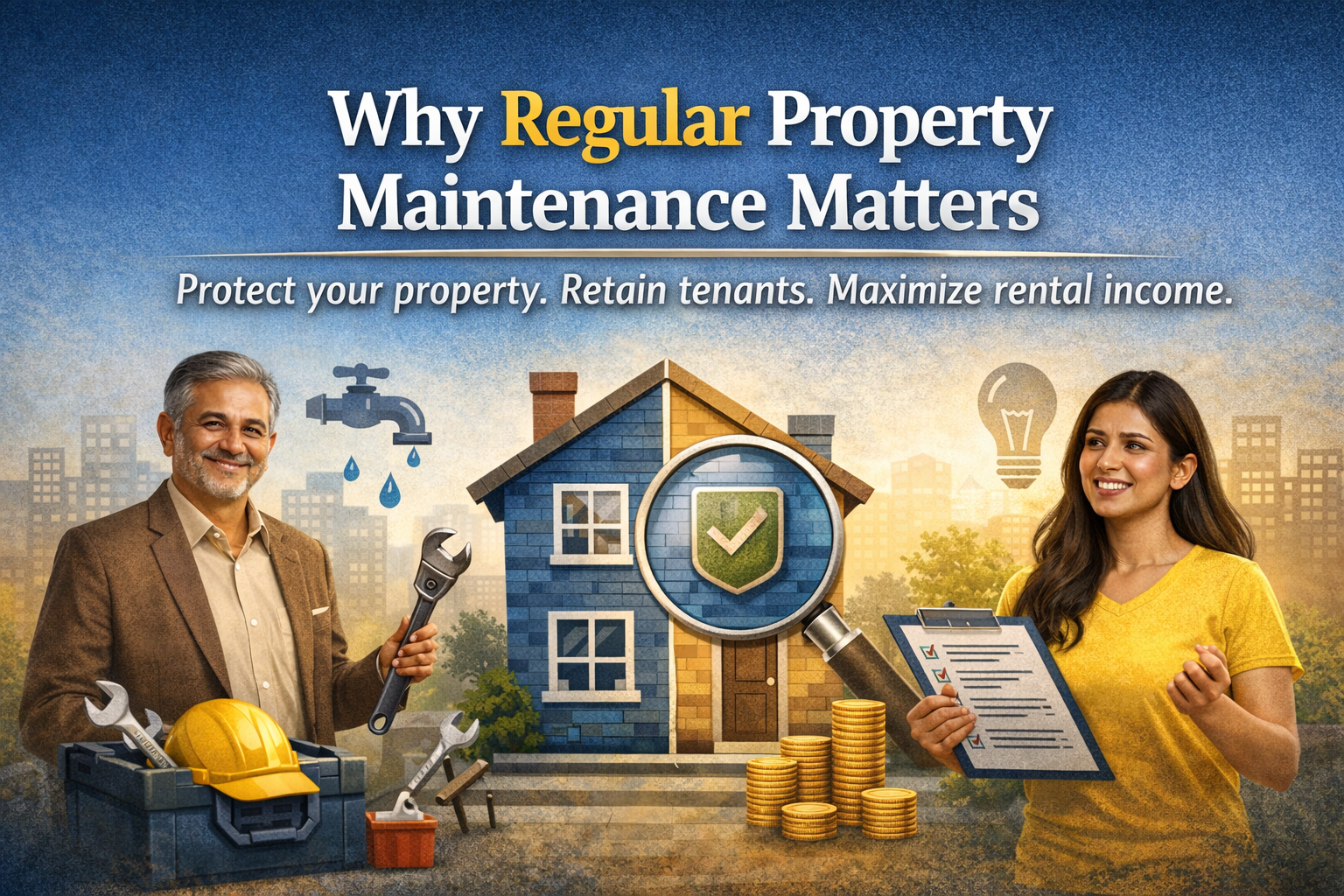
Why Regular Property Maintenance Is Important for Rental Income
Many landlords see maintenance as an expense—but in reality, regular property maintenance is an investment that directly impacts rental income. Well-maintained properties attract better tenants, reduce vacancies, and prevent costly repairs, ensuring steady and long-term rental returns.
Here’s why regular property maintenance is essential for protecting and increasing your rental income.
1. Helps Attract Quality Tenants
Tenants prefer clean, well-maintained properties. When your property looks good and functions properly, it attracts responsible tenants who are willing to pay fair rent and stay longer.
2. Increases Tenant Retention
Tenants are more likely to renew their lease when maintenance issues are handled quickly. Regular upkeep creates a comfortable living environment, reducing tenant turnover and vacancy losses.
3. Prevents Costly Emergency Repairs
Small problems like minor leaks or wiring issues can turn into expensive repairs if ignored. Preventive maintenance helps identify and fix issues early, saving money in the long run.
4. Protects Property Value
Routine maintenance preserves the structure, fittings, and overall condition of your property. A well-maintained property retains its market value and remains competitive in the rental market.
5. Supports Timely Rent Payments
Satisfied tenants are more likely to pay rent on time. When tenants feel their concerns are addressed, disputes reduce and rent collection becomes smoother.
6. Reduces Vacancy Periods
Properties in good condition rent faster. Regular maintenance ensures your property is always move-in ready, minimizing downtime between tenants and maximizing annual rental income.
7. Makes Rent Increases Easier
Tenants accept reasonable rent hikes more easily when the property is well-maintained. They see value in paying higher rent for a comfortable, problem-free home.
8. Ensures Legal & Safety Compliance
Regular checks ensure your property meets safety standards for electricity, plumbing, and structural integrity. Compliance reduces legal risks and protects landlords from penalties or disputes.
9. Improves Landlord-Tenant Relationships
Quick maintenance response builds trust and professionalism. Strong relationships lead to smoother communication and fewer conflicts.
10. Enables Predictable Budgeting
Planned maintenance allows landlords to budget annually instead of facing sudden, high emergency expenses—keeping rental income stable.
Conclusion
Regular property maintenance is not optional—it is essential for consistent rental income. By investing in preventive care and timely repairs, landlords can reduce costs, retain quality tenants, and maximize long-term returns.
Leave a Reply