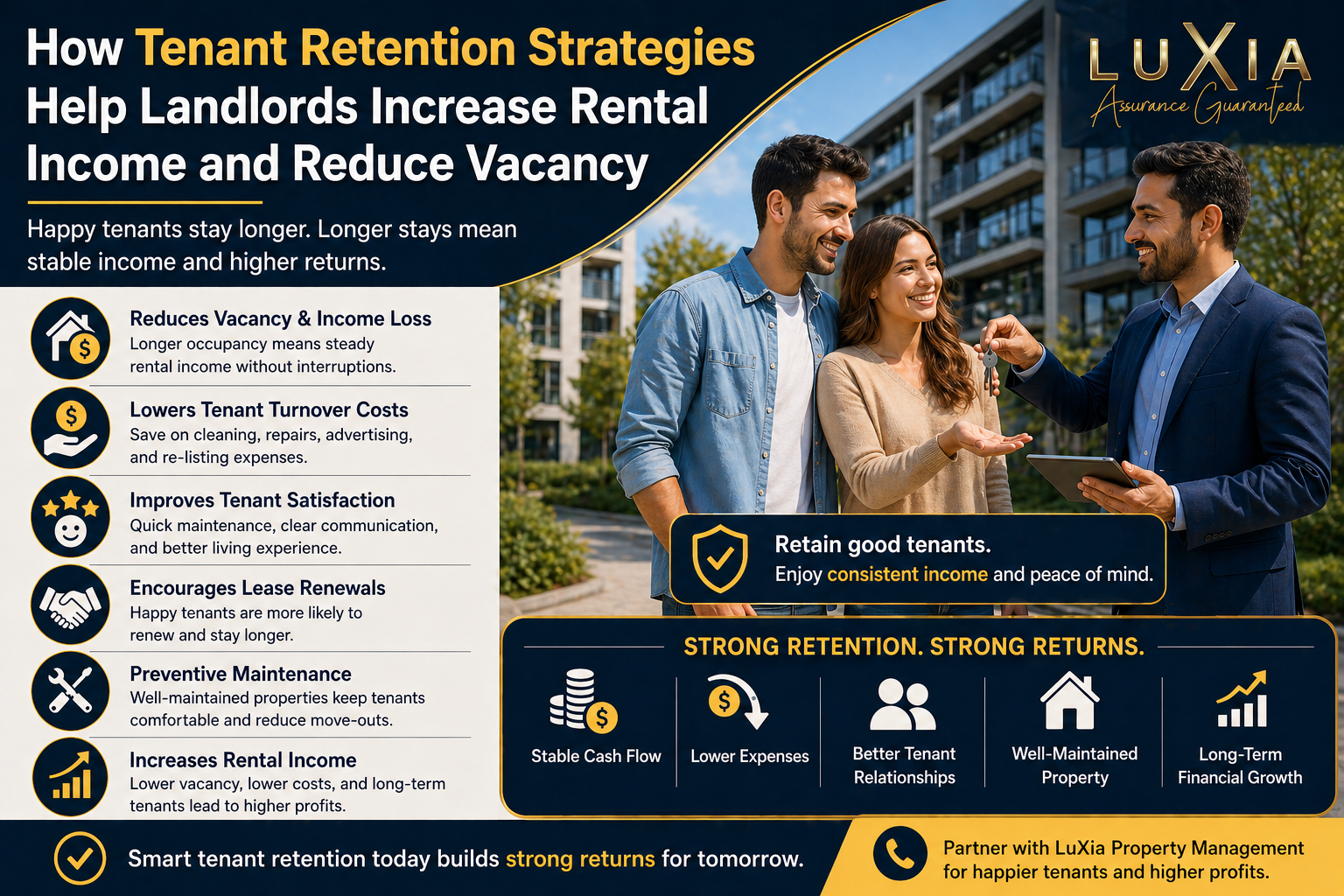
Tenant Retention Strategies for Landlords to Increase Rental Income & Reduce Vacancy
Introduction
In today’s competitive rental market, attracting tenants is important—but retaining them is even more valuable. Many landlords focus heavily on filling vacancies, but often overlook the cost and effort involved in replacing tenants. We have tenant retention strategies for landlords.
In 2026, rising operational costs, increasing competition, and higher tenant expectations are pushing landlords to prioritize tenant retention strategies. Keeping good tenants for a longer period not only reduces vacancy but also ensures stable rental income and lower overall expenses.
Tenant retention is no longer just a convenience —it is a key factor in maximizing property profitability and long-term investment success. Luxia
1. Reduces Vacancy and Income Loss
One of the biggest financial challenges landlords face is vacancy.
When a tenant leaves, landlords often deal with:
- Loss of rental income
- Property cleaning and repairs
- Marketing and advertising costs
- Time spent finding new tenants
Even a short vacancy period can impact monthly cash flow.
Tenant retention helps minimize these gaps. When tenants stay longer, landlords benefit from continuous rental income without interruptions. This stability is especially important for landlords managing EMIs, maintenance expenses, and other financial commitments.
2. Lowers Tenant Turnover Costs
Tenant turnover is more expensive than many landlords realize.
Costs associated with turnover include:
- Deep cleaning and repainting
- Minor repairs and maintenance
- Brokerage or listing fees
- Time spent on tenant screening
Frequent tenant changes can significantly reduce overall rental profitability.
By focusing on retention strategies, landlords can reduce these recurring expenses. Long-term tenants help keep operational costs under control while improving the overall return on investment.
3. Improves Tenant Satisfaction and Experience
Tenant satisfaction is one of the most important factors influencing retention.
Modern tenants expect:
- Quick maintenance responses
- Clear communication
- Well-maintained properties
- Hassle-free living experience
When these expectations are met, tenants are more likely to renew their lease.
Landlords who prioritize tenant experience often see better relationships, fewer complaints, and higher satisfaction levels. This not only improves retention but also creates a more positive rental environment.
4. Encourages Long-Term Lease Renewals
Lease renewals are directly linked to how tenants feel about their living experience.
Factors that encourage renewals include:
- Timely issue resolution
- Fair and transparent rent policies
- Clean and well-maintained property
- Professional management
Tenants are less likely to move if they feel comfortable, valued, and supported.
Long-term leases reduce the effort required to manage the property and ensure steady rental income for landlords.
5. Builds Strong Landlord-Tenant Relationships
A positive relationship between landlord and tenant can significantly impact retention.
Effective communication helps:
- Resolve issues quickly
- Build trust
- Avoid misunderstandings
When tenants feel heard and respected, they are more likely to stay longer.
Simple actions like regular check-ins, prompt responses, and clear communication can make a big difference in tenant satisfaction and loyalty.
6. Prevents Property Wear and Tear
Frequent tenant turnover can lead to increased wear and tear on the property.
Every time a tenant moves out, there is:
- Movement of furniture
- Cleaning and repainting
- Minor damages
Long-term tenants, on the other hand, tend to:
- Take better care of the property
- Maintain cleanliness
- Report issues early
This helps preserve the condition of the property and reduces maintenance costs over time.
7. Supports Better Financial Planning
Stable tenants make it easier for landlords to plan their finances.
With consistent rental income, landlords can:
- Manage EMIs and expenses
- Plan property upgrades
- Invest in additional properties
Unpredictable vacancies can disrupt financial planning and create stress.
Tenant retention provides a stable and predictable income stream, which is essential for long-term financial success.
8. Enhances Property Reputation
In the digital age, tenant feedback plays a major role in shaping a property’s reputation.
Satisfied tenants can:
- Recommend the property to others
- Leave positive reviews
- Help attract quality tenants
A well-managed property with happy tenants becomes easier to rent out in the future.
Good reputation reduces marketing effort and increases demand.
9. Preventive Maintenance Improves Retention
Maintenance is one of the most common reasons tenants decide to leave.
Delayed or poor maintenance can lead to:
- Tenant dissatisfaction
- Complaints
- Early move-outs
Preventive maintenance helps:
- Identify issues early
- Reduce breakdowns
- Improve living conditions
A well-maintained property encourages tenants to stay longer and renew their lease.
10. Professional Property Management Improves Retention
Many landlords choose professional property management services to improve tenant retention.
Property managers help with:
- Timely maintenance coordination
- Rent collection and reminders
- Tenant communication
- Issue resolution
They also ensure a structured and professional approach to property management.
This reduces stress for landlords and creates a better experience for tenants.
Conclusion
Tenant retention is one of the most effective ways to increase rental income and reduce costs. By keeping tenants satisfied and encouraging long-term stays, landlords can minimize vacancies, reduce turnover expenses, and maintain a stable income stream.
In 2026, focusing on tenant retention is not just a strategy—it is a necessity for landlords who want to stay competitive and maximize their property’s performance.
By improving maintenance, communication, and overall tenant experience, or by working with professional property management services, landlords can build long-term success and stronger returns from their rental properties. Luxia
Leave a Reply